
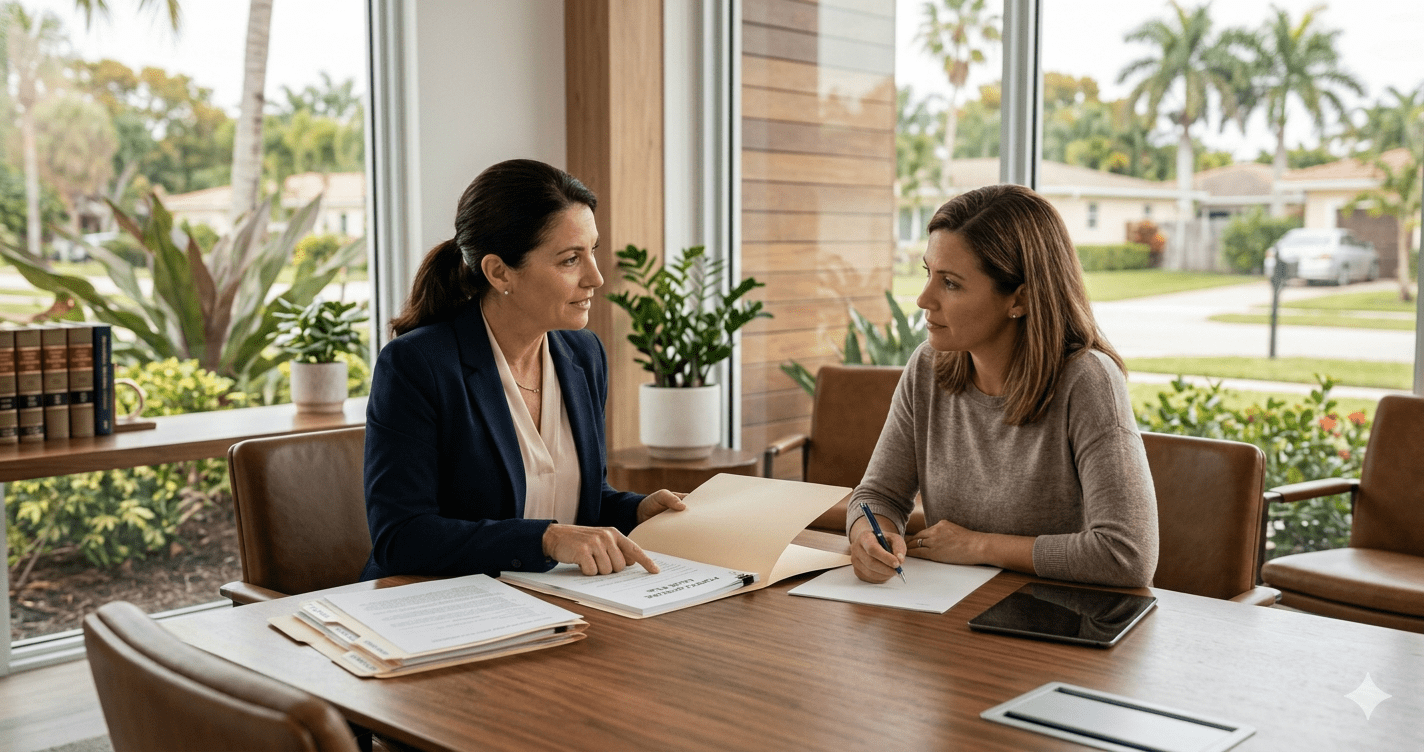
A foreclosure defense lawyer is a Florida attorney who represents homeowners facing a lender’s lawsuit to take back their home. In Florida, foreclosure is judicial — meaning every case goes through court. Acting early gives you legal defenses, time to negotiate, and a real chance to keep your home.
What does a foreclosure defense lawyer actually do in Florida?
A foreclosure defense lawyer steps in the moment a lender files a foreclosure complaint and protects the homeowner’s legal rights at every stage of the court process. Their job is to challenge the lender’s case, surface defenses, and buy the family time to reach a workable resolution.
In practical terms, a foreclosure defense attorney reviews the mortgage and promissory note, files a formal answer with affirmative defenses in court, and pushes back on procedural mistakes the bank may have made. They also negotiate loan modifications, short sales, and deed-in-lieu agreements where appropriate.
Lumsden Law Firm does not handle foreclosure defense litigation directly. Our work focuses on the estate-planning side — protecting your home through the Florida homestead exemption, Lady Bird deeds, and trust ownership so that creditor claims and probate complications never reach your front door in the first place.
How does the Florida foreclosure process work?
Florida is a judicial foreclosure state, which means a lender must file a lawsuit in court and obtain a judgment before they can sell your home. The full process typically takes 8 to 14 months, though contested cases can stretch much longer.
After you miss roughly three to four mortgage payments, the lender sends a Notice of Default. If you do not cure the default, the lender files a foreclosure complaint in the county circuit court. You then have 20 days to file a written answer — miss that deadline and a default judgment can be entered against you.
From the answer stage, the case moves through discovery, motions, and eventually trial or summary judgment. If the lender wins, the court schedules a public foreclosure sale, usually 30 to 35 days after the judgment. Until that sale is finalised and the certificate of title issues, you may still have rights — including the statutory right of redemption under Florida Statutes § 45.0315.
What are the most common foreclosure defenses in Florida?
The most common foreclosure defenses in Florida challenge the lender’s standing to sue, the accuracy of the loan documents, and the bank’s compliance with state and federal mortgage rules. A strong defense can delay or stop the foreclosure entirely.
Typical defenses raised in Florida foreclosure cases include:
• Lack of standing — the entity suing cannot prove it owns the note
• Failure to provide proper pre-suit notice under the mortgage
• Statute of limitations — Florida’s 5-year limit under Fla. Stat. § 95.11(2)(c)
• Violations of the federal Truth in Lending Act or RESPA
• Errors in the loan amount, payment history, or escrow accounting
• Predatory lending or unconscionable loan terms
Florida courts take procedural compliance seriously. Banks that cannot produce the original note or prove a clean chain of assignment often lose on standing alone.
How does Florida homestead protection fit into foreclosure?
Florida’s homestead protection is one of the strongest in the country — but it does not stop a mortgage lender from foreclosing. Homestead protects your primary residence from most general creditors, not from the bank holding your mortgage, the IRS, or contractors who recorded a valid construction lien.
Article X, Section 4 of the Florida Constitution shields up to one-half acre of urban property (or 160 acres of rural property) from forced sale by most creditors. That protection passes to your spouse and minor children when you die. It is the cornerstone of every Florida estate plan that includes a home.
Where homestead and estate planning truly matter is BEFORE financial trouble starts. A Lady Bird deed lets you keep full control of your home during life while passing it to your heirs outside of probate. A revocable trust can hold your homestead and preserve the protection. Joint ownership with right of survivorship can sidestep probate entirely. These tools do not stop foreclosure — but they protect what is left, simplify what happens if you die owning a mortgaged home, and shield the property from the creditors homestead WAS designed to defeat.
This is where careful estate planning makes the real difference. Lumsden Law Firm helps Orlando families use Florida homestead, Lady Bird deeds, and revocable trusts to protect the family home before any creditor — or court — gets close to it. Start with our Florida Homestead Protection guide or call (407) 798-7744 to talk it through.
When should you call a foreclosure defense lawyer?
Call a foreclosure defense lawyer the moment you fall behind on your mortgage — not after you receive a foreclosure complaint. Early action gives an attorney the most options to negotiate with your lender, qualify you for loss-mitigation programmes, and avoid court entirely.
Specific warning signs that mean it is time to make the call include: a missed second or third mortgage payment, a Notice of Default letter, a ‘Lis Pendens’ filed with the county recorder, a court summons, or a scheduled sale date. Each stage narrows your options. Once a foreclosure judgment is entered, your defenses are largely gone.
If you are also navigating the death of a family member who owned a mortgaged home in Florida, the situation requires both probate counsel and foreclosure-defense counsel working together. The home must move through probate while the mortgage stays current — otherwise the lender can foreclose against the estate. This is one area where Lumsden Law Firm’s probate experience directly helps families avoid losing a loved one’s home.
Frequently Asked Questions About Foreclosure Defense in Florida
How long does foreclosure take in Florida?
Florida foreclosures typically take 8 to 14 months from the lender filing the complaint to the courthouse sale. Contested cases with active defenses can stretch 18 months or longer. Once a judgment is entered, the sale is usually scheduled 30 to 35 days later under Florida Statutes § 45.031.
Can I stop a foreclosure once it has started in Florida?
Yes — Florida homeowners can still stop a foreclosure after it begins by reinstating the loan, negotiating a loan modification, filing for bankruptcy, or successfully defending the lawsuit in court. The earlier you act after receiving the complaint, the more options remain available to keep your home.
Does Florida homestead exemption protect my home from foreclosure?
Florida’s homestead exemption does NOT protect your home from your mortgage lender, the IRS, or valid construction liens. It does protect your primary residence from most other general creditors under Article X, Section 4 of the Florida Constitution. Homestead is a creditor shield — not a mortgage shield.
What happens to a mortgaged home if the owner dies during foreclosure?
If a Florida homeowner dies during foreclosure, the mortgage debt does not disappear — it becomes a claim against the estate. The property passes through probate, and the personal representative must either keep the mortgage current, negotiate with the lender, or allow the foreclosure to proceed. Heirs have a federal right to assume certain mortgages under the Garn-St. Germain Act.
How much does a foreclosure defense lawyer cost in Florida?
Florida foreclosure defense lawyers typically charge between $1,500 and $5,000 in flat fees for a full defense, or $200 to $400 per hour. Some firms offer payment plans, and a small number take cases on a contingency basis when strong lender violations are present. Free consultations are common — always ask upfront.
Protect Your Florida Home Before Foreclosure Becomes a Risk
Ready to make sure your home is protected the right way? Lumsden Law Firm does not handle foreclosure litigation — but we do the planning that keeps Florida families out of that situation in the first place. From homestead protection to Lady Bird deeds and revocable living trusts, our Florida Homestead Protection guide walks you through every step. Call (407) 798-7744 or email info@lumsdenlawfirm.com — I will make sure you feel supported every step of the way.