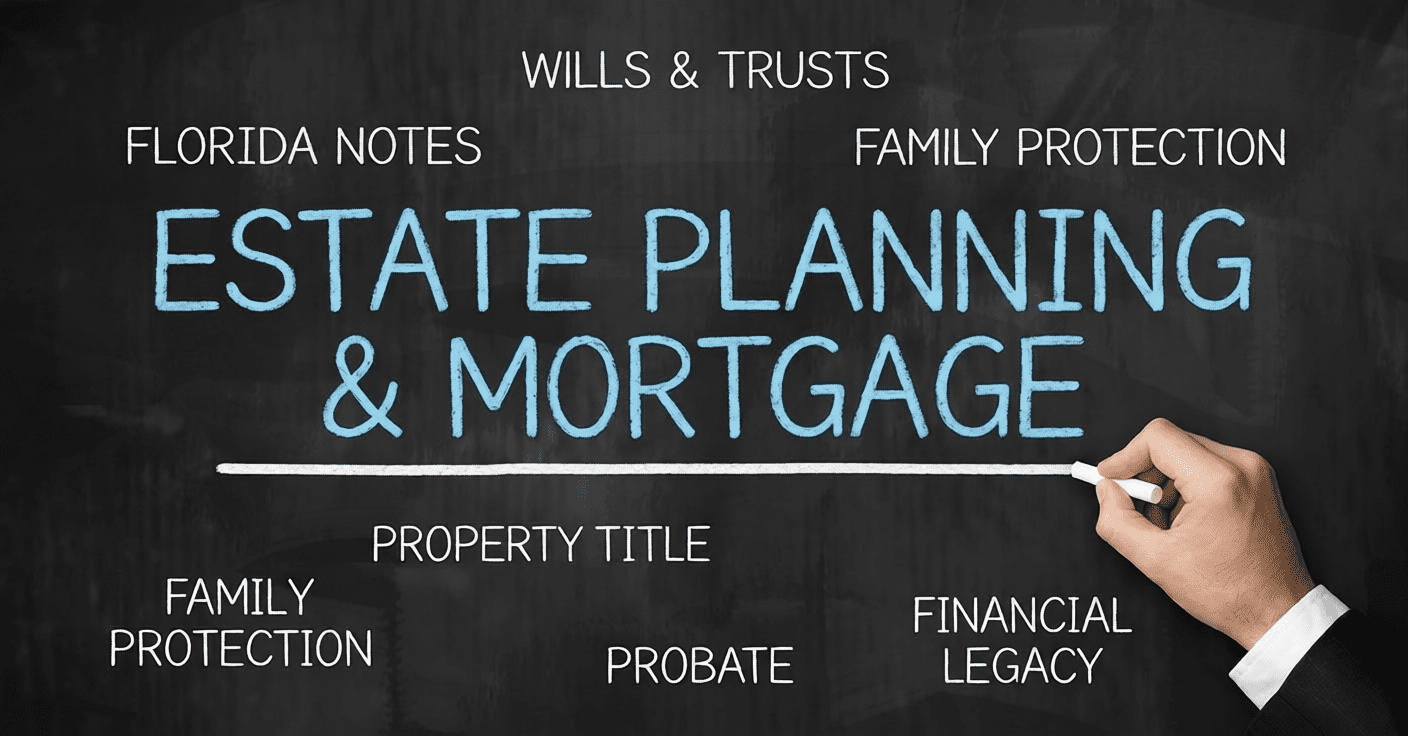
A mortgage and note are two linked legal documents that travel together. The note is your promise to pay. The mortgage secures that promise against real estate. In Florida estate planning, these documents shape what happens to your home — and your debt — when you die.
What Is a Mortgage and Note in Florida?
A mortgage and note are two separate documents that work as a pair. The promissory note is your written promise to repay borrowed money. The mortgage is the document that pledges your Florida home as security for that promise.
Lenders use both because each does a different job. The note creates the debt and sets the terms — interest rate, monthly payment, and payoff date. The mortgage gives the lender the legal right to foreclose if the note is not paid. Without the note there is no debt to collect. Without the mortgage there is no property to seize.
In Florida, mortgages are recorded in the county where the property sits. Notes are not recorded — they are private contracts between borrower and lender. This matters in estate planning because the recorded mortgage shows up in title searches, but the note can be misplaced or forgotten by the family.
What Happens to a Mortgage and Note When You Die in Florida?
When you die in Florida, your mortgage debt does not disappear. The note remains owed and the mortgage lien stays attached to your home. Your estate or your heirs must continue making payments, refinance the loan, or sell the property to satisfy the debt.
Florida probate handles the property side of this. If your home is titled in your sole name, it usually passes through probate before anyone can sell, refinance, or transfer it. The mortgage company keeps collecting payments during that time. Missed payments during probate can trigger default, late fees, and in worst cases foreclosure.
If you hold the mortgage and note as the lender — for example, you sold a property and financed the buyer yourself — the note becomes an asset of your estate. Your beneficiaries inherit the right to collect the remaining payments.
Can You Inherit a Mortgage on a Florida Home?
Yes, you can inherit a mortgage on a Florida home, and federal law protects your right to keep paying it. The Garn–St Germain Depository Institutions Act of 1982 stops lenders from calling the loan due when a relative inherits a mortgaged home. The new owner takes the property subject to the existing mortgage.
The new owner is not personally liable on the note unless they formally assume it. They simply own a home with a lien on it. As long as the monthly payment is made, the lender cannot foreclose.
Practical first steps for heirs: contact the lender within 30 days, send a certified copy of the death certificate, ask for a payoff statement, and confirm where to send payments. Florida lenders see this often — most have a dedicated successor-in-interest process.
This is the moment most Florida families realise they need a plan. At Lumsden Law, I help Orlando families set up wills, trusts, and Lady Bird deeds so a mortgage and note transfer cleanly — without probate surprises. Start with a conversation at Estate Planning at Lumsden Law or call (407) 798-7744 today.
What If You Hold the Mortgage and Note as the Lender?
If you hold a mortgage and note as the lender, you own a valuable estate asset that needs careful planning. This happens often in Central Florida — parents finance a child’s home, sellers carry back a note on a sold property, or investors hold private mortgages for income.
That note pays out monthly for years, sometimes decades. Without an estate plan, the note passes through probate before your beneficiaries can collect a single payment. Borrowers may stop paying when they learn the original lender has died, and your family loses income while sorting out who has authority to enforce the loan.
Solutions include placing the note in a revocable living trust, assigning it by written agreement, or naming a successor payee. Each approach keeps payments flowing and gives your beneficiaries a clear legal right to collect or enforce the mortgage. You can read more about
how Florida probate works and why these assets often sit frozen during administration.
How Does a Florida Estate Plan Protect Your Mortgage and Note?
A Florida estate plan protects your mortgage and note by deciding in advance who takes the property, who collects the debt, and how probate is avoided. The right combination of documents prevents the most expensive mistakes — missed payments, lost notes, and frozen homes.
Three Florida tools do most of the heavy lifting. A revocable living trust holds the home and any private notes, transferring both at death without probate — see trusts vs wills in Florida for a clear comparison. A Lady Bird deed keeps the home in your name during life and transfers it automatically to named beneficiaries at death, subject to the existing mortgage. Joint tenancy with right of survivorship works for couples who own the home together.
Each option has trade-offs. A trust gives the most flexibility and creditor protection — useful when you want to protect your Florida home from probate creditors. A Lady Bird deed is faster and cheaper to set up. JTWROS only works for two living owners. The right choice depends on your family, your goals, and how the mortgage and note fit into the bigger picture.
Frequently Asked Questions About Mortgage and Note in Florida Estate Planning
Does a mortgage have to go through probate in Florida?
The mortgage debt itself does not stop probate, but the home it secures does pass through probate unless titled in a trust, held jointly with right of survivorship, or transferred by a Lady Bird deed. The lender’s lien survives the owner’s death and the new owner takes the property subject to that mortgage.
What is the difference between a mortgage and a promissory note?
A promissory note is a written promise to repay borrowed money under specific terms. A mortgage is a separate document that pledges real estate as security for that promise. The note creates the debt; the mortgage gives the lender the right to foreclose if the note is not paid.
Can heirs keep paying my mortgage after I die in Florida?
Yes. Federal law allows heirs who inherit a Florida home to take over the existing mortgage and continue payments without triggering a due-on-sale clause. Heirs must contact the lender promptly, provide death certificates, and confirm payment arrangements to keep the loan in good standing.
What happens if I hold a private mortgage and note as the lender when I die?
A privately held mortgage and note are assets of your estate. They pass to your beneficiaries through your will, trust, or by Florida intestate succession. Whoever inherits the note has the right to collect the remaining payments and enforce the mortgage if the borrower defaults.
How do I keep a mortgaged home out of Florida probate?
Title the property in a revocable living trust, hold it jointly with right of survivorship, or use a Florida Lady Bird deed. Each method transfers ownership at death outside probate. The mortgage lien stays with the property, but the new owner avoids court delays and fees.
Plan Your Mortgage and Note With Lumsden Law
Ready to make sure your mortgage and note are handled the way you want? At Lumsden Law, my Estate Planning service walks Orlando families through every option — wills, trusts, Lady Bird deeds, and beneficiary planning — so your home and your loved ones are protected. Call (407) 798-7744 or book a consultation today. I’ll make sure you feel supported every step of the way.