
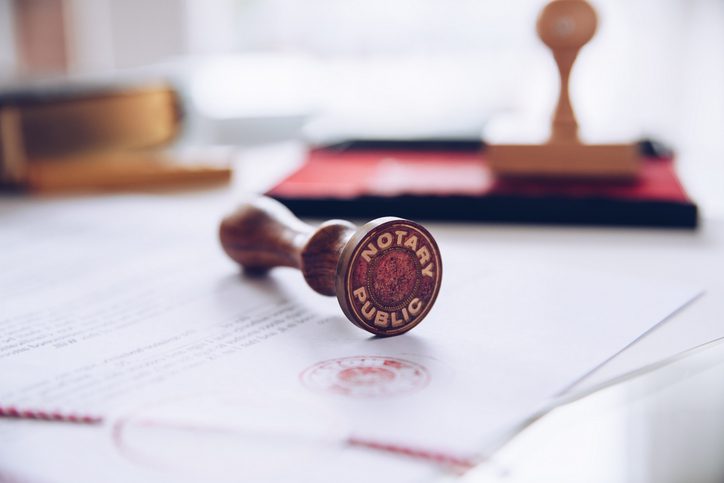
Yes — in Florida, a power of attorney must be notarized to be legally valid. Florida Statutes §709.2105 requires that a power of attorney be signed by the principal in the presence of two witnesses and acknowledged before a notary public. A document signed without a notary does not meet Florida’s legal requirements and cannot be relied upon in a crisis.
What Are the Legal Requirements for a Power of Attorney in Florida?
A power of attorney is a legal document that gives someone you trust — called your agent — the authority to act on your behalf. In Florida, that document only carries legal weight if it is executed correctly. Getting the signing wrong does not just create a technical defect. It produces a document that the people you need most — banks, hospitals, government agencies — can legally refuse to honour.
Florida Statutes §709.2105 sets out the minimum requirements for a valid power of attorney. The principal — the person granting the authority — must sign the document. Two witnesses must be present and sign as well. And the document must be acknowledged before a notary public.
These three elements — principal signature, two witnesses, and notarisation — are all required. Miss any one of them and the document is defective. Our detailed guide to the legal requirements for a power of attorney in Florida explains what each requirement means in practice.
What Happens If a Power of Attorney Is Not Notarized in Florida?
A power of attorney that is not properly notarized in Florida is not legally enforceable. That is a simple statement with enormous real-world consequences — and many families discover it too late.
Imagine your parent has a stroke. You find the power of attorney they signed years ago, confident they planned ahead. But when you present it at the bank to pay their bills, or at the hospital to make medical decisions, it gets rejected — because a notary never signed it, or one of the two required witnesses is missing.
Financial institutions, healthcare providers, real estate title companies, and government agencies all have the right to refuse a power of attorney that does not meet Florida’s execution requirements. They are not being obstructive. They are legally protected from acting on an invalid document. The result for your family is paralysis at exactly the moment you need to act.
What Are the Exact Signing Requirements for a Florida Power of Attorney?
Florida’s execution requirements for a power of attorney are precise. Every element matters. Here is exactly what the law requires:
- The principal must sign the document — or direct another person to sign it in the principal’s presence, if the principal is physically unable to sign.
- Two witnesses must be present and sign the document at the same time as the principal. Neither witness can be the agent named in the power of attorney. Neither can be the notary.
- A notary public must acknowledge the principal’s signature. The notary certifies that the principal appeared before them, was identified, and signed the document voluntarily.
- All parties — principal, both witnesses, and notary — must be present at the same signing event. Signing in stages or at separate locations does not satisfy Florida’s requirements.
Florida law does not permit shortcuts here. A power of attorney signed by the principal alone — even with the best of intentions — is not valid in Florida without the witnesses and notary.
Getting every element right at the signing table is what separates a document that works from one that fails. I prepare Florida powers of attorney that are properly drafted and correctly executed — so your family never faces a rejection at the moment they need it most. Visit Lumsden Law’s Florida Power of Attorney page or call (407) 798-7744 today.
Does a Durable Power of Attorney Have Different Requirements in Florida?
A durable power of attorney is a specific type of power of attorney that remains valid even if the principal later becomes mentally incapacitated. The word ‘durable’ is critically important for estate planning — a non-durable power of attorney automatically ends if the principal loses capacity, which is often the precise moment the agent is needed most.
In Florida, the execution requirements for a durable power of attorney are identical to those for any other power of attorney. The same two witnesses and notary are required. What makes a power of attorney durable is a specific statement in the document itself — typically language stating that the authority granted survives the principal’s incapacity.
Without that durability language, a power of attorney that looks complete and was signed correctly will still fail when your family faces incapacity. Our guide to the durable power of attorney in Florida explains what the document must say — and why the distinction between durable and non-durable matters so much.
Can You Notarize a Power of Attorney Remotely in Florida?
Yes — Florida is one of the states that allows remote online notarization, known as RON, for powers of attorney. Under Florida Statutes §117.201, a principal, their witnesses, and the notary can complete the signing process via an approved audiovisual platform — without everyone being in the same physical room.
This option became widely used during the pandemic and has remained a legitimate and legally valid choice in Florida for estate planning documents, including powers of attorney. The notary must be commissioned in Florida, and both the technology platform and identity verification process must meet Florida’s specific requirements.
Remote notarization does not relax any of the underlying requirements. The two-witness rule still applies. The notary still acknowledges the principal’s signature. The difference is simply the medium — a compliant audiovisual session rather than an in-person meeting.
That said, remote notarization also introduces its own potential for errors if the process is not managed correctly. Our article on common mistakes when creating a power of attorney in Florida covers the pitfalls to watch for — whether you are signing in person or remotely.
Frequently Asked Questions About Power of Attorney Notarization in Florida
Does a power of attorney have to be notarized in Florida?
Yes — Florida law requires a power of attorney to be signed by the principal in the presence of two witnesses and acknowledged before a notary public. This requirement applies to all durable and non-durable powers of attorney executed in Florida. A document signed without proper notarization does not meet Florida’s legal requirements under Florida Statutes §709.2105 and cannot be legally enforced.
What happens if a Florida power of attorney is not notarized?
A Florida power of attorney that is not properly notarized is not legally valid. Banks, financial institutions, healthcare providers, and government agencies are entitled to reject a document that does not meet Florida’s execution requirements. In a medical or financial emergency, a defective power of attorney could leave your family unable to act on your behalf when it matters most.
How many witnesses does a Florida power of attorney require?
A Florida power of attorney requires two witnesses. Both witnesses must be present when the principal signs the document. Neither witness can be the agent named in the power of attorney, and neither can be the notary. The principal, both witnesses, and the notary must all be present at the same signing — they cannot sign the document at separate times or locations.
Does a durable power of attorney in Florida need to be notarized?
Yes — a durable power of attorney in Florida has the same notarization and witness requirements as any other power of attorney. It must be signed by the principal in the presence of two witnesses and acknowledged before a notary public under Florida Statutes §709.2105. The word ‘durable’ refers to whether the document remains valid if the principal becomes incapacitated — not to different signing requirements.
Can a Florida power of attorney be notarized remotely or online?
Yes — Florida allows remote online notarization (RON) for powers of attorney under Florida Statutes §117.201. The principal, witnesses, and notary can complete the signing via an approved audiovisual platform. However, the notary must be Florida-commissioned, and strict identity verification and technology requirements apply. Remote notarization is legally valid but must follow all Florida RON rules precisely to be enforceable.
Getting the signing requirements right is the difference between a power of attorney that protects your family and one that fails them in a crisis. At Lumsden Law, I prepare Florida powers of attorney that are properly drafted, correctly executed, and ready to work when your family needs them. Visit our Florida Power of Attorney service page or call (407) 798-7744 — I will make sure you feel supported every step of the way.