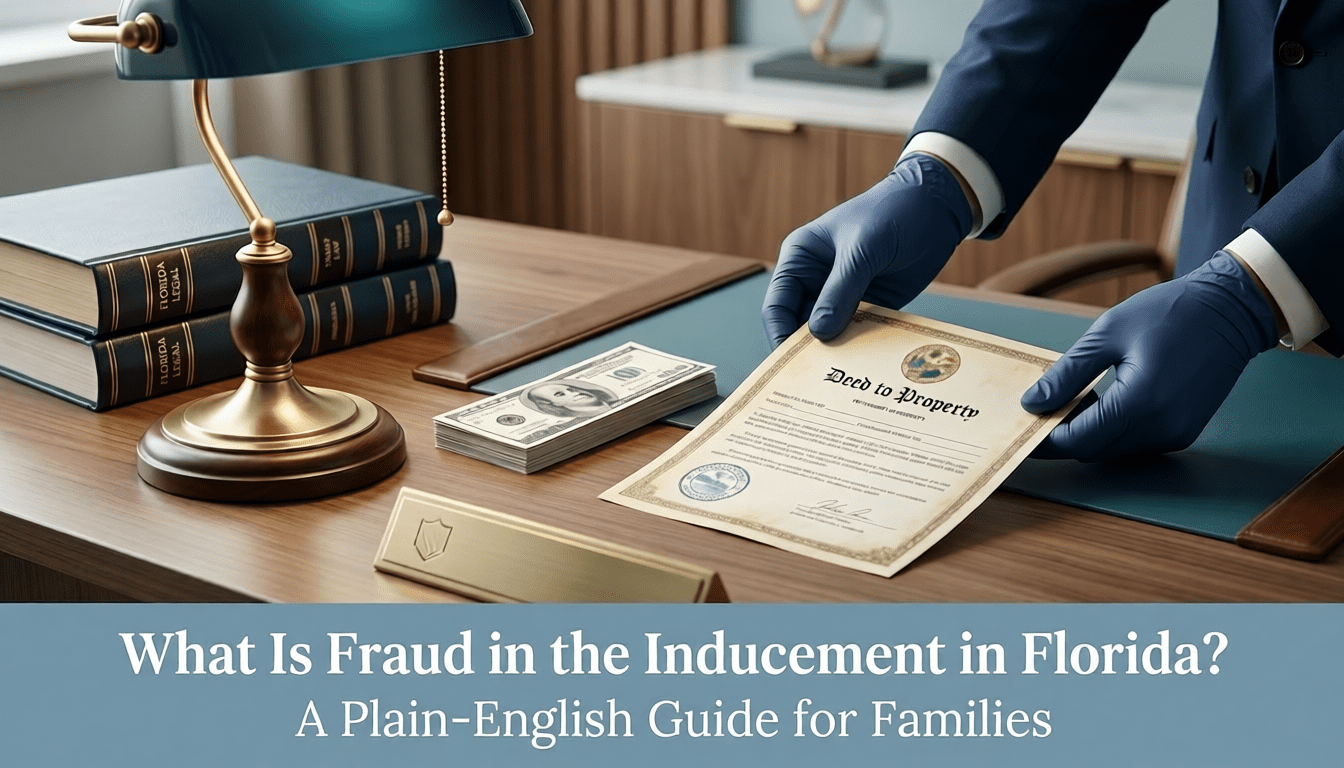
What Is Fraud in the Inducement in Florida? A Plain-English Guide for Families
Fraud in the inducement is when someone lies or hides the truth to trick another person into signing a legal document — like a will, trust, or deed — they would not have signed otherwise. In Florida estate cases, it is one of the main legal grounds for contesting a will or challenging a transfer of assets.
What Does Fraud in the Inducement Mean in Florida?
Fraud in the inducement means someone was deceived into signing a document on purpose. The person knew exactly what they were signing — a will, a trust amendment, a deed — but they were lied to about a fact that mattered. If they had known the truth, they would have signed something different, or nothing at all.
In a Florida estate case, this usually looks like a family member feeding a parent false information so they cut another child out of the will. Or a caregiver convincing an elderly person that their adult child has stolen from them — when no such thing happened. The lie is the bait. The new will or deed is the catch.
Under Section 732.5165 of the Florida Statutes, a will procured by fraud is void. The probate court can throw out the entire document, or just the parts shaped by the lie.
How Is Fraud in the Inducement Different from Undue Influence?
Fraud in the inducement and undue influence often appear in the same case — but they are not the same thing. Fraud is about a lie. Undue influence is about pressure.
With fraud, the wrongdoer feeds the testator false information. The testator believes the lie and signs based on it. With undue influence, the wrongdoer overpowers the testator’s free will — through isolation, dependency, threats, or relentless persuasion — until the testator signs to make the pressure stop.
Many Florida will contests plead both grounds together, because the same person who lied is often the same person applying the pressure. A Florida probate attorney can help you see which doctrine fits your facts best.
What Are Common Examples of Fraud in the Inducement in Estate Cases?
Real Florida cases tend to follow recognisable patterns. Knowing them helps families spot a problem early.
Common examples include:
- A new spouse or caregiver telling the testator that an estranged child is dead or has rejected them, when neither is true.
- A relative claiming they have been paying the testator’s bills, mortgage, or medical costs, when in fact they have not.
- A child convincing an ageing parent that a sibling stole money from them, then asking to be named sole beneficiary as ‘protection’.
- Forged documents, fake invoices, or fabricated text messages used to support a false story about another family member.
- Hiding the existence of a beneficiary altogether — never telling the testator that a grandchild was born, for example.
Each of these can be the basis for a fraud in the inducement claim — if the lie was material and the testator relied on it when signing.
How Do You Prove Fraud in the Inducement in a Florida Will Contest?
Proving fraud in the inducement in Florida is hard work. The legal standard is clear and convincing evidence — higher than the ordinary ‘more likely than not’ standard in most civil cases. Courts want strong proof before they set aside a will.
A successful claim usually requires evidence of four things: a false statement of material fact, the wrongdoer’s knowledge that it was false, the wrongdoer’s intent that the testator rely on it, and the testator actually relying on it when signing.
Useful evidence includes medical records, prior versions of the will, bank statements, emails, text messages, witness statements from neighbours or carers, and testimony from the drafting attorney where allowed. The earlier these are preserved, the stronger the case becomes.
This is the moment to call an attorney. I help Florida families investigate, file, and fight will contests where fraud or undue influence is suspected — and I move quickly, because the 90-day deadline is unforgiving. Start with a conversation: visit Will Contests in Florida or call (407) 798-7744.
What Happens If a Florida Court Finds Fraud in the Inducement?
If a Florida probate court finds fraud in the inducement, it has several options. The most common outcome is that the court declares the fraudulent will — or the affected parts of it — invalid.
When a whole will is voided, Florida law looks for a prior valid will. If one exists, the estate is distributed under that earlier will. If no prior will exists, Florida’s intestacy laws take over and the estate passes to legal heirs in the order set out by statute.
In serious cases, the wrongdoer can also be held personally liable for damages, and Florida’s slayer and abuser statutes may bar them from inheriting at all. The probate court protects the testator’s true wishes — even when the testator is no longer here to speak for themselves.
Frequently Asked Questions About Fraud in the Inducement in Florida
Is fraud in the inducement a valid reason to contest a will in Florida?
Yes — fraud in the inducement is one of the recognised legal grounds to contest a will in Florida under Section 732.5165 of the Florida Statutes. If a will was signed because the testator was deceived about a material fact, a Florida probate court can declare it invalid in whole or in part.
What is the difference between fraud in the inducement and fraud in the execution?
Fraud in the inducement happens when someone is tricked about the contents or consequences of a document they knowingly sign. Fraud in the execution happens when someone is deceived about what the document actually is — for example, told they are signing a Christmas card when it is really a will.
How long do I have to contest a Florida will based on fraud?
In Florida, you generally have 90 days from the date you receive the Notice of Administration to file a will contest, or 20 days if you were personally served. Missing this deadline almost always ends your right to challenge the will, even if fraud clearly occurred.
Who can bring a fraud in the inducement claim against a Florida will?
Only an interested person can bring the claim — typically a beneficiary named in a prior will, an heir who would inherit under Florida intestacy laws, or someone with a direct financial stake in the estate. A Florida probate attorney can confirm whether you qualify as an interested person.
What kind of evidence do I need to prove fraud in the inducement?
You need clear and convincing evidence — a higher standard than ordinary civil cases. Useful evidence includes medical records, emails, text messages, witness statements, prior versions of the will, and proof that the wrongdoer knew the statement was false and the testator relied on it.
For families wanting to understand the broader picture, our guide to the Florida Last Will and Testament walks through what a valid Florida will requires, and our piece on preventing family disputes in Florida probate shows how strong planning can stop these fights before they start. If you are local, the Lumsden Law estate and probate team in Orlando serves Central Florida families directly.
Ready to challenge a Florida will you believe was signed under false pretences? At Lumsden Law, our Will Contests in Florida service walks you through every step — investigating the fraud, gathering evidence, filing within the 90-day deadline, and standing with you in probate court. Call (407) 798-7744 or book a consultation today — I will make sure you feel supported every step of the way.